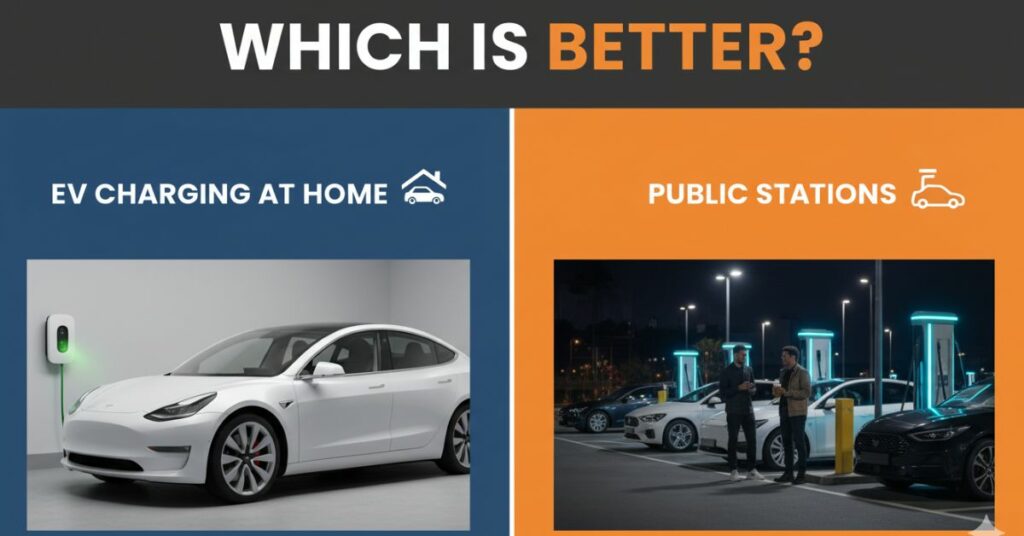
If you drive an electric vehicle, you’ve probably asked yourself EV home charging vs public charging, which one is the right fit for your lifestyle. Charging is no longer just a quick stop at a gas station. It becomes part of your daily routine. The choice you make affects your convenience, your costs, and how fast your car is ready to go. In this guide, you will get a clear picture of both options so you can decide what works best for you. Understanding Your EV Charging Choices When it comes to charging your EV, it’s not just about plugging in. How, where, and when you charge affects your day-to-day life. Home charging offers comfort and control, while public stations give you flexibility when you’re on the road. Knowing what each option brings helps you choose the one that fits your driving habits. What Charging at Home Actually Looks Like? Charging at home is usually simple. You park, plug in, and go about your day. Most people charge overnight, so your car is ready every morning. You don’t need to plan around station availability. Home setups vary in speed. Some use a standard outlet. Others use a faster dedicated charger. These fall under different levels of EV charging, which determine how quickly your car can fill up. Even slower home chargers often give you enough range for your daily trips. If you have space and the right wiring, installing a home charger is convenient. It works best if you park in the same place every night and want your car ready without thinking about it. How Public EV Charging Stations Work? Public chargers are shared spaces you’ll find at stores, offices, parking garages, and highways. Some are made for short top-ups while you run errands. Others are fast chargers designed to get you back on the road quickly during long trips. You rely on public charging when you can’t charge at home or when traveling longer distances. Availability depends on location and demand. Sometimes a charger is open, sometimes there’s a wait. Knowing where chargers are helps you plan your trips without stress. Comparing Costs Charging at home usually costs less because electricity rates are predictable. You see the cost on your regular bill, and there are no extra fees. Public charging stations often charge more for convenience or speed. Over time, depending mostly on public chargers can increase what you spend. Using home charging as your main source can lower your overall EV charging cost while still using public stations when necessary. Charging Speed Differences You Should Know Speed is one of the biggest differences between charging at home and in public. EV charging speed home vs public varies a lot. Home chargers are slower but happen while you’re not using the car. Public fast chargers are designed to refill your battery quickly, but you have to wait nearby. For your everyday driving, slower home charging usually works just fine. Public chargers shine when you need to keep moving, like during a long trip. Convenience for Your Routine Home charging is convenient because it happens while you sleep or work. You don’t need to hunt for a station or wait in line. Public charging requires more planning. You may need to check station availability, apps, or memberships. Convenience depends on how easy it is to reach a charger where you already go. Your lifestyle determines which option feels easiest day to day. Reliability and Availability Home charging is dependable because it’s yours. Once installed, it’s available whenever your power is on. You don’t have to compete with anyone else. However, public chargers can be busy or out of service. If you rely on them, it’s a good idea to know backup locations. Planning ahead keeps your trips stress-free. Installing a Home Charger Setting up a charger at home takes some planning. You may need electrical upgrades and space for installation. Costs vary depending on your home layout. Many people use an EV smart charging station that lets you schedule charging at off peak times. This makes it easier to manage energy use and keeps your car ready without extra effort. EV Charging Options for Homeowners There are several EV charging options for homeowners. Some choose basic setups for short daily trips. Others install faster chargers for convenience and flexibility. Your decision is based on how you drive and how your house is set up. Installation can be done in a garage or outdoors. Getting the fastest charger is not as important as matching it to your driving style. Homeowners can set up an EV charging system that suits their lifestyle rather than just the technology. Public Charging for Longer Trips Public charging is essential if you travel long distances. Highway fast chargers keep you moving and reduce downtime. Here, EV charging speed home vs public becomes very clear. Home chargers alone cannot support long trips efficiently. Public stations fill that gap and make traveling in an EV practical. Battery Health and Charging Habits How you charge affects your battery over time. Slower home charging produces less heat and is gentler on your battery. Public fast charging is useful but works best when used only when needed. Many drivers wonder is home EV charging better for keeping their battery healthy. In most cases, mixing both options helps maintain long-term performance. Who Benefits Most from Home Charging? Home charging works best if you have a private parking space and a predictable daily schedule. If you commute regularly, you’ll find it convenient. Many people decide is home EV charging better for the comfort and control it gives. Long-term EV owners also benefit. A stable home setup makes it easy to develop good charging habits and avoid daily stress. Who Benefits Most from Public Charging? Public charging works well if you live in an apartment, a city without private parking, or travel often. It gives you flexibility when home charging isn’t possible. For these drivers, asking is home EV charging better matters
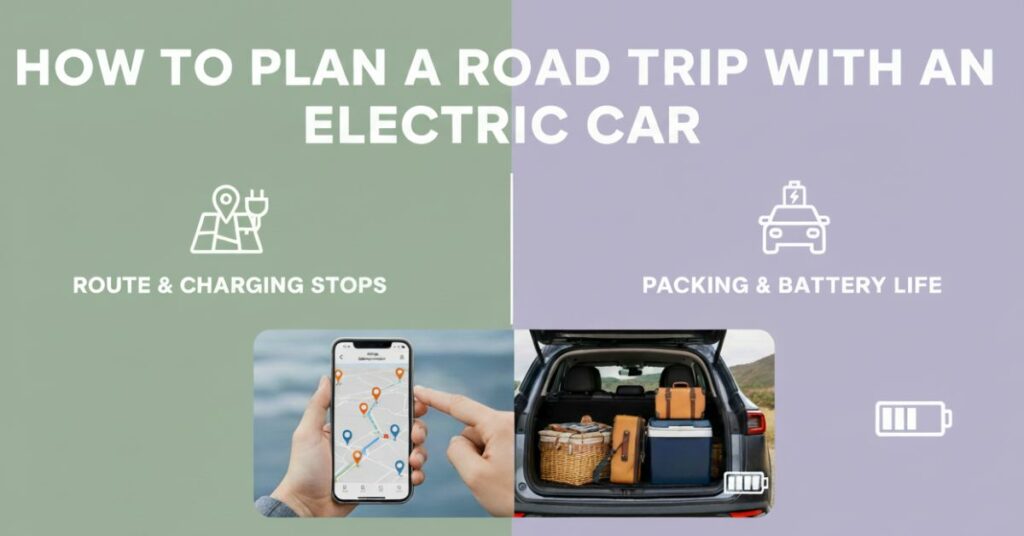
Electric cars are becoming increasingly popular, and more drivers are choosing them for longer trips. Planning a road trip with an electric car requires some extra thought compared to traditional vehicles, but it can be simple and enjoyable. With careful EV road trip planning, you can explore new places while staying relaxed and confident about your battery. A road trip with electric car can be quieter, more eco-friendly, and even enjoyable thanks to growing charging networks. Knowing how to plan a trip with electric car ensures you can reach your destinations without stress or unexpected delays. Best Way to Plan a Road Trip with an Electric Car Planning a road trip with an electric car takes a bit more thought than a traditional trip, but it can be simple with the right approach. You need to understand your car’s range, know where and when to charge, and drive efficiently to make the most of your battery. From mapping your route and choosing charging stations to packing smart and budgeting your trip, each step helps your journey run smoothly. The following sections break down everything you need to consider for a safe, enjoyable, and stress-free EV road trip. 1. Assess Your EV’s Range and Capabilities The first step in planning an EV road trip is knowing how far your car can really go. While manufacturers provide estimated ranges, real-world conditions often differ. Weather, driving speed, terrain, and even extra luggage can reduce the distance your car travels on a single charge. Before setting out, it helps to test your EV’s performance on familiar routes. Many modern vehicles provide real-time efficiency data, and apps can predict how much range you’ll lose in different conditions. Understanding your car’s limits is key when learning how to plan a road trip with an EV. It also gives you a chance to practice EV charging etiquette, like moving your car promptly once charging is complete and sharing stations considerately, which makes trips smoother and less stressful for everyone. 2. Plan Your Route with Charging Stops Charging stations aren’t as ubiquitous as gas stations, so mapping your route in advance is key. Use tools like PlugShare, A Better Routeplanner, or the apps offered by charging networks to see locations, charger types, and availability. Tesla Superchargers, Electrify America, and other networks have different coverage areas, so knowing which fits your car helps. For long drives, plan your stops strategically. Schedule charging around meals, sightseeing, or rest breaks. Efficient EV road trip planning means you won’t waste time waiting for a charger, and your journey will feel more relaxed and structured. 3. Understand Charging Types and Speeds Not all chargers are the same. Level 1 chargers use a standard household outlet and are very slow, mostly useful for overnight charging. Level 2 chargers are faster and are commonly found at hotels or shopping centers. DC fast chargers are the quickest, capable of charging most EVs up to 80 percent in about half an hour. Selecting the right charger matters for keeping your trip on schedule. For long highway stretches, fast chargers are ideal. For overnight stays, Level 2 chargers often suffice. Knowing how to plan a trip with electric car around these charging options makes your road trip smoother and more predictable. 4. Calculate Travel Time with Charging Breaks When planning a road trip with an EV, you need to include charging stops in your time calculations. Unlike refueling a gas car, EV charging can take anywhere from 20 minutes to several hours, depending on the station. Estimate how long each stop will take, and align them with meal breaks or sightseeing to make charging time productive. For longer trips, consider overnight charging at hotels. This way, your car is fully charged in the morning without losing hours to daytime charging. Calculating travel time realistically ensures your trip stays on track and minimizes surprises. 5. Pack Smart for an EV Road Trip Packing for an electric car road trip requires a few extra essentials. Bring all necessary cables, adapters, and apps to monitor charging stations. A portable charger can help in emergencies if you cannot find a compatible station. Also, carrying a small toolkit or emergency kit is always wise. Minimizing battery drain helps extend range. Use climate control sparingly, keep luggage weight manageable, and maintain proper tire pressure. Regular electric car maintenance before the trip, such as checking software updates, brakes, and fluid levels, ensures your vehicle is ready for the journey. 6. Optimize Energy Use on the Road How you drive has a big effect on your EV’s battery. Taking it easy with gentle acceleration, keeping a steady speed, and making good use of regenerative braking can save a lot of energy. Try to avoid sudden starts or hard braking because these use more power and can reduce your range. Driving smoothly not only helps your battery last longer but also makes long stretches on the road more comfortable. The path you choose also matters. High-speed highways can drain your battery more quickly than local or scenic roads. Extreme heat or cold can lower efficiency, so weather also has an impact. You can plan an electric car trip that feels smooth, controlled, and more pleasurable from beginning to end by paying attention to these details. 7. Accommodation and Overnight Charging Staying at hotels with EV chargers can make your road trip a lot easier. Many accommodations now offer Level 2 chargers, so your car can recharge while you rest. It’s a good idea to check ahead for availability, any extra costs, and whether the charger works with your vehicle. A lot of travelers choose hotels with chargers to avoid having to make extra stops during the day. Overnight charging also gives you some freedom. While your car is powering up, you can explore the local area, grab a meal, or simply relax without worrying about running low on battery. Planning your stops around hotels with chargers is a simple way to make your EV road trip
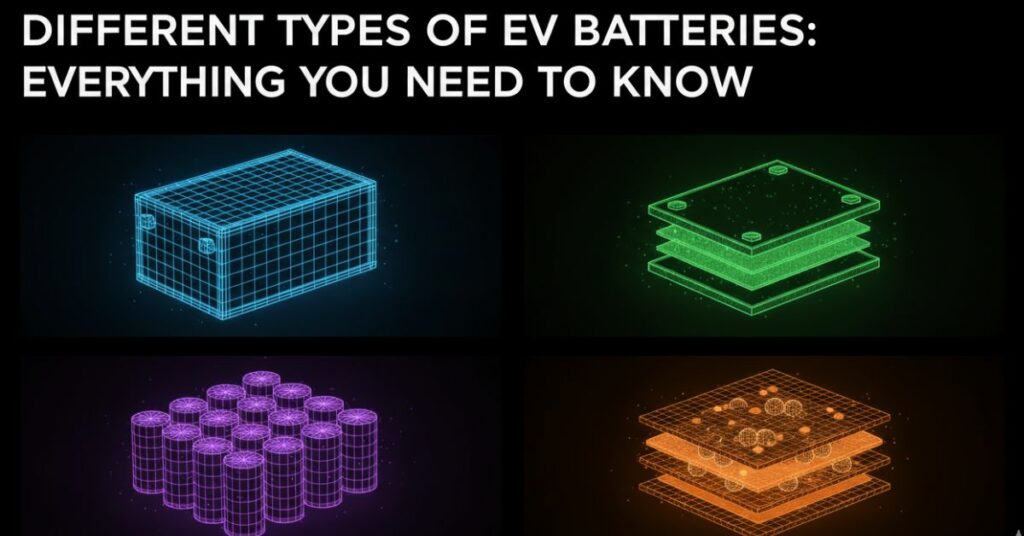
Electric vehicles are no longer a niche option. They are becoming a practical choice for daily driving, family use, and even long-distance travel. Yet many buyers still feel uncertain about what actually powers these cars. The battery is the most important component of any EV, and understanding it helps remove much of the confusion around range, charging, and long-term value. This guide explains the types of EV batteries used today in clear, simple language, without technical overload. When you understand how EV batteries differ, it becomes easier to compare vehicles honestly and choose one that fits your lifestyle rather than relying on marketing claims alone. What Are EV Batteries And Why Does The Battery Type Matter? An EV battery stores electrical energy and delivers it to the motor when you drive. That sounds simple, but the chemistry inside the battery determines how the vehicle behaves in real life. Battery type influences driving range, charging speed, safety, performance in hot or cold weather, and how well the battery holds capacity over time. Not every driver needs the same thing. Some prioritize long highway trips, while others focus on daily commuting or cost control. Knowing the types of EV batteries helps buyers understand why two electric cars with similar prices can feel very different on the road. How Electric Vehicle Batteries Work? Inside an EV battery pack are hundreds or thousands of small cells grouped together. These cells store energy chemically and release it as electricity when needed. A battery management system constantly monitors temperature, charge level, and power flow to keep everything running safely and efficiently. Unlike a traditional car battery, EV batteries are designed for deep use and frequent charging. Modern batteries for EV cars are engineered to handle years of daily driving while maintaining stable performance. How EV Battery Types Affect Range, Charging Time, And Performance? Battery chemistry directly affects how a vehicle charges and performs. Some batteries work especially well with EV Chargers, while others focus on slower, more stable charging patterns. Charging behavior is also influenced by the levels of EV charging available at home or on the road. Different Types of EV Batteries Used in Electric Vehicles Automakers choose battery designs based on performance goals, cost targets, and safety standards. The types of batteries used in electric vehicles today include several lithium-based chemistries, older hybrid-focused technologies, and emerging designs still under development. Each option offers a different balance between range, durability, and affordability. 1. Lithium-ion Batteries Lithium-ion batteries are the most widely used option in modern electric vehicles. They offer strong energy storage in a relatively compact and lightweight form, making them ideal for cars that need a longer driving range. This chemistry dominates the types of electric car batteries category because it can be adjusted to meet different needs, from performance-focused models to everyday commuter vehicles. Advantages of lithium-ion EV batteries Because lithium-ion batteries have a higher energy density, cars can go farther between charges. Additionally, they respond well to sophisticated charging systems and enable faster charging. Their reduced weight enhances handling and efficiency, particularly when traveling in cities and on highways. Disadvantages of lithium-ion EV batteries These batteries are more expensive to make and can lose capacity faster if they get too hot or are charged quickly too often. Modern safety systems help protect them, but keeping them at the right temperature is key to making them last longer. 2. Lithium-iron Phosphate Batteries Lithium iron phosphate, commonly called LFP, is becoming more common in affordable electric vehicles and commercial fleets. This chemistry sacrifices some range in exchange for longer life and improved safety. Manufacturers often select LFP when designing cost-effective batteries for EV cars that need consistent performance rather than maximum distance. Advantages of Lithium-Iron Phosphate Batteries LFP batteries last longer and handle repeated charging cycles very well. They are more resistant to overheating and are considered one of the safest lithium-based options. Their simpler material composition also helps reduce manufacturing costs. Disadvantages of Lithium-Iron Phosphate Batteries Shorter driving range and somewhat heavier battery packs are the results of lower energy density. This can be a noticeable restriction for drivers who frequently travel great distances. 3. Nickel Metal Hydride Batteries Nickel metal hydride batteries were widely used in early hybrid vehicles and first-generation electric cars. While they are no longer common in modern EVs, they still appear in some hybrid systems. These batteries helped shape the types of batteries used in electric vehicles we rely on today by proving that electrified drivetrains could be durable and dependable. Advantages of Nickel Metal Hydride Batteries They are robust, reliable, and tolerant of temperature changes. Their long service history makes them a trusted technology in specific applications. Disadvantages of Nickel Metal Hydride Batteries Compared to contemporary lithium-based alternatives, they are heavier and have lower energy storage capacity. They feel antiquated and inefficient for full electric use when compared to more recent designs. 4. Solid State Batteries Solid-state batteries replace liquid electrolytes with solid materials. This design promises higher energy storage and improved safety, but large-scale production is still limited. Many researchers believe solid-state technology could redefine the types of electric car batteries available in the coming years, once manufacturing challenges are solved. Potential Benefits of Solid-State EV Batteries Longer range, quicker charging, and a lower risk of fire are all possible with solid-state batteries. Additionally, they could reduce the size of battery packs without sacrificing performance. Current Challenges of Solid-State Batteries High production costs and durability concerns remain barriers. Most solid-state batteries are still in testing phases rather than mass-market vehicles. Other Emerging EV Battery Technologies Worth Knowing About Sodium-ion and lithium-sulfur batteries are being explored as alternatives that rely on more abundant materials. While promising, these technologies are not yet widely used. Their development shows how innovation continues to expand the types of ev batteries available for future electric vehicles. EV Battery Lifespan and How It Varies By Battery Type? Most EV batteries are designed to last many years, often well beyond the warranty period.
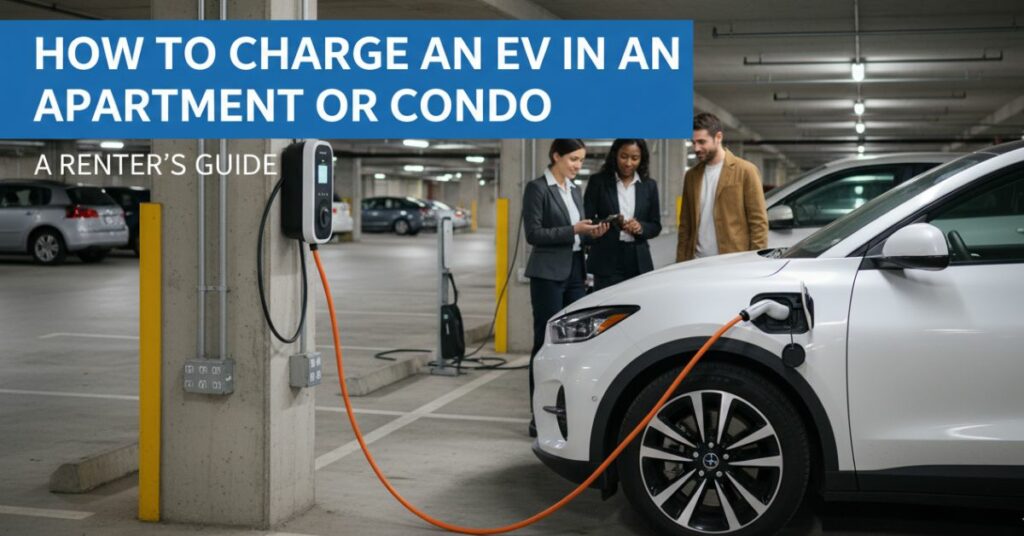
Many renters want an electric car but feel unsure about EV charging in apartments. People worry about permission, parking, and access to power. It can feel like something meant only for people who own houses. The truth is that renters can still make it work. With a little planning, you can charge just fine even in a shared building. This guide explains real-world solutions in simple language so anyone can follow them without stress. Understanding Your Charging Options as a Renter The first step is knowing the basic ways an EV can charge. Some are slow but easy to use. Some are fast but need approval. Once you understand these differences, the rest becomes easier. Many renters start by asking how to charge EV at apartment buildings in a simple way that does not cause problems with the landlord. You do not need special knowledge. You only need to know what fits your daily routine. The idea behind smart EV charging also helps renters. It means charging in a way that saves time and uses the power that is already available. Once you look at charging through that lens, you start to see that you have more control than you think. Ways You Can Charge an EV When Living in an Apartment or Condo There is no single method that works for everyone. Renters use different setups based on the building rules and their parking spot. Some people plug in at their complex while others stop at public chargers. Many mix and match during the week. The important thing is finding a method that feels natural rather than stressful. When you focus on simple habits, you begin to understand how to charge EV at apartment situation in a smooth and predictable way. 1. Using Charging Stations Provided by Your Building Many apartments now offer shared chargers. This is one of the most common ways people learn how to charge electric car at apartment properties without asking for special construction. You plug in and park for a while and move the car when the session ends. Some buildings let residents use the chargers freely, and others require a small fee. Either way, the process is simple. Shared chargers often work best for renters who come home at predictable hours. If your parking spot is near the charging area, the routine becomes even easier. This also helps newcomers get used to EV charging at apartments without worrying about technical issues. These stations usually support different charging speeds, and you can understand them better once you learn the idea behind levels of EV charging, which explains how long each type of charger needs to add range. 2. Asking Your Landlord or HOA to Allow Charger Installation If your building has no charger, you can still ask for permission to install one. Many landlords are open to the idea now because more renters drive electric, and it even adds value to the property. When you approach them, share simple details about the installation steps and the licensed electrician who will handle the work. This usually eases their concerns and helps start a productive conversation. Sometimes, renters do not need a full wall-mounted unit. A portable Level 2 charger can be enough for daily use. Approval is still required, but the setup is lighter and easier for everyone. This kind of option is becoming more common as EV charging in apartments grows and more renters want practical ways to charge electric cars without depending on public stations every day. If your building is flexible, you might be surprised how often a polite request leads to a yes. 3. Installing a Portable Charger in Your Parking Spot Portable chargers are often the easiest for people who have their own assigned space. Some renters only need a simple power source to keep their car topped up. Even slow charging works well if you do not drive long distances. You only need to make sure the outlet is safe and the landlord approves the setup. Many people learn how to charge an electric car in an apartment by starting with a small portable charger and keeping their routine simple. This method works best when you drive short daily routes. The charger adds range overnight and you wake up with enough battery to get through the day. Renting an apartment does not stop you from using a portable setup as long as you follow safety rules. 4. Using Public Chargers Near Your Building Public chargers are everywhere now. Malls, gyms, grocery stores, and main roads often have them installed. Public stations are fast and easy to use, and they work well when you do not have access to a home charger. Many renters stop for a charge while running errands or during lunch. Once this becomes part of your routine, you realize that you already know how to charge electric car at apartment living by simply relying on what is around you. Public charging also helps people who worry about busy shared chargers at their complex. You can spread your charging sessions across the week and avoid stress. This option makes life simpler and helps renters who move often and do not want to install anything. 5. Charging Your EV at Work When Home Charging Is Hard Charging at work is one of the most helpful solutions for renters. Many companies now offer charging spots for employees. You plug in during the day and leave with a full or nearly full battery. This completely removes the need to charge at home. People who drive moderate daily distances find this method reliable and stress-free. Some workers even talk to their employers about adding chargers if none exist. Many companies accept because the demand keeps growing. Once workplace charging becomes part of your day, you automatically know how to charge an electric car in an apartment because home charging becomes optional instead of required. 6. Using a Standard Wall Outlet When Allowed Some renters can plug into a normal outlet
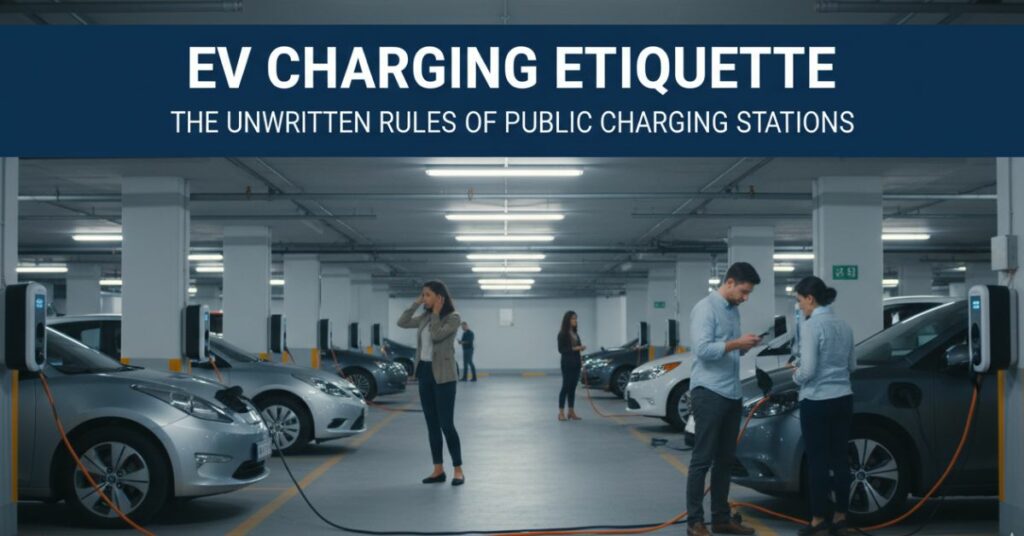
Understanding EV charging etiquette is important for every EV driver. Public chargers are shared spaces, and how you behave affects other drivers waiting to charge. Following simple habits keeps wait times shorter and prevents small conflicts. Even small actions, like choosing the right charger or moving your car promptly when finished, can make a big difference. This guide explains the rules in a simple way so every driver can charge efficiently and responsibly. Why EV Charging Etiquette Matters? Public charging stations are shared resources that rely on driver cooperation. When drivers follow simple habits, chargers remain available, lines move faster, and everyone gets a fair chance to charge. Small actions, like unplugging when your battery is full or parking neatly, can prevent frustration for other drivers. As more people switch to EVs, understanding proper charging station etiquette ensures that public stations remain accessible and efficient. Good habits make the experience smoother for everyone. Know Your Charger Types Before You Plug In Not all chargers provide the same speed. Level 1 and Level 2 chargers deliver slower charging, while DC fast chargers can fill your battery quickly. Knowing what your car can handle helps you choose the correct charger and avoid slowing down others. Following public EV charging etiquette means picking a charger that matches your battery level. If your battery is almost full, it makes sense to grab a slower charger and leave the fast ones for drivers who really need a quick top-up. Sticking to the right charger also keeps the station equipment in good shape and makes everything run more smoothly for everyone. With smart EV charging technology, it’s even easier to keep an eye on your session and find the best available charger without any guesswork. Pick the Right Charger Without Blocking Others Choosing the correct charger is part of public EV charging etiquette. Some chargers are meant for short stops, others for longer stays. If your car cannot handle fast charging, do not occupy a fast charger unnecessarily. Check the station’s power limits before plugging in. It prevents slowdowns and keeps the line moving. Simple actions, like selecting the right charger and parking properly, show consideration for other drivers and help the station operate efficiently. Stay Near Your Car While Charging Try to stay close to your car while it charges. Many apps send alerts when your battery is ready, making it easy to unplug promptly. Leaving your car unattended for long periods can frustrate others, especially at busy stations. Following charging station etiquette includes monitoring your charging session and moving your car on time. It ensures fairness and helps prevent unnecessary delays for the next driver. Move Your Car Once Charging Stops As soon as your battery is fully charged, disconnect and move your vehicle. In order to promote this behavior, some stations impose idle fees. Unnecessarily leaving a fully charged car in a public area can prevent other people from charging. Following EV charging etiquette helps everyone access chargers fairly. Many new drivers ask can I leave my EV plugged in overnight at public stations, but it is usually discouraged because it prevents others from using the spot. Handling Busy Stations With Respect Busy stations require patience. Forming a queue and taking turns is part of proper etiquette. Drivers who arrive first should generally take the next available charger, and communicating politely about remaining charging time prevents misunderstandings. New drivers often ask Can I leave my EV plugged in overnight at crowded stations, but this is usually not allowed. Proper charging station etiquette ensures a fair and smooth experience for all drivers. Never Unplug Another Car Without Permission Unplugging someone else’s EV without permission can create conflicts. Even if the battery looks full, you cannot know the owner’s plans. Waiting or leaving a note is a safer option. Respecting this rule is a key part of public EV charging etiquette. Only unplug another car in emergencies, and always follow station rules. Questions like Can I leave my EV plugged in overnight are better addressed at private chargers or long-stay locations. Use Chargers at Malls, Workplaces, and Hotels Properly Workplace chargers are for employees, mall chargers for shoppers, and hotel chargers for guests. Matching your charging duration to the location avoids inconveniencing others. Mall chargers are not free parking. Move your car promptly when charging finishes. Hotels may allow overnight charging, but always check station rules. Following these habits shows awareness and supports proper public EV charging etiquette. Treat Charging Equipment With Care Always handle charging equipment carefully. Return cables to their holders after use and avoid leaving them on the ground, as this can cause damage. Reporting broken or faulty chargers helps keep stations safe and reliable for the next user. Good habits also support EV car maintenance, ensuring your vehicle and the infrastructure remain in optimal condition. Caring for chargers and using them responsibly helps maintain station efficiency and prevents unnecessary repairs or downtime for everyone. Handling Problems at Charging Stations Conflicts or misunderstandings sometimes happen at charging stations, but staying calm usually solves the problem. Most issues arise from miscommunication or impatience, and a polite approach often works best. If a charger is malfunctioning, contact support instead of trying to fix it yourself. This approach ensures the station remains safe and accessible. Following these basic rules keeps the environment fair for all drivers and maintains a positive culture around public EV usage. The Future of Charging Etiquette As EV adoption grows, better apps and smarter chargers will make sharing stations easier. smart EV charging tools help drivers find available chargers, track charging progress, and manage time efficiently. Good habits will continue to be important even as technology advances. No matter how sophisticated the infrastructure gets, awareness, consideration, and civility avoid confrontations and guarantee that public chargers continue to be available and equitable for all. Final Words Following EV charging etiquette makes public stations safe, fair, and efficient. Using the right charger, staying nearby, and moving your car promptly saves time and

Washing car in winter might feel like extra work. Cold, ice, and snow make it inconvenient. But salt on roads, slush, and grime can damage paint and metal over time. Neglecting winter cleaning can lead to rust and scratches that are expensive to fix. Washing car in winter protects your vehicle and keeps it looking good. Knowing how to wash car in winter properly makes the process safe and effective. Why Is Washing a Car in Winter Important? You might think winter is the time to skip washing, but it is actually more important than in summer. Roads are covered in salt and sand, which stick to your paint. Snow and slush carry dirt that scratches the surface. Even small scratches can add up over time, leaving your car looking dull. Regular washing also keeps windows, mirrors, and lights clear. Dirty mirrors or headlights reduce visibility and can be dangerous in winter. Washing car in cold weather prevents corrosion, protects paint, and keeps your car safer to drive. Safety First Before You Wash Your Car Cold weather makes washing your car risky. Water can freeze on your car or driveway. Wear gloves and boots with a good grip. Avoid washing on icy surfaces if possible. If you have access to a garage or heated area, that is ideal. Check the temperature before you start. Washing when it’s above freezing is safer. Water freezes quickly in extreme cold, which can damage your paint or make surfaces slippery. Choosing the Right Place for Car Wash During Winter Where you wash your car makes a big difference. Washing outdoors in freezing weather can leave water spots or create ice patches. Heated garages or indoor areas are much better for winter car care. If you choose a touchless car wash during winter, make sure they use warm water and gentle cleaning products. Manual washing is also an option, but it takes more time and needs extra care. Washing in a driveway is fine as long as the temperature is above freezing and the surface is dry. Essential Tools and Supplies Using the right tools makes washing car in cold weather easier and safer. You don’t need many things but they should be correct. Soft mitt or sponge Two buckets with grit guards Microfiber towels for drying pH-balanced car wash soap Wheel cleaner is safe for winter grime Using eco friendly car cleaning products is a good choice. They are gentle on the paint and safer for the environment. Avoid dish soap or abrasive materials. They can strip wax and damage the paint over time. Pre-Wash Preparation Before washing, remove loose snow gently with a soft brush. Never scrape ice directly on paint. If there is thick ice, use a de-icing spray to soften it. Rinse the car lightly with lukewarm water to remove heavy salt and dirt. This reduces scratches during washing. Even if the car looks clean, a pre-rinse is important in winter because grit from salt and sand can easily scratch the paint. How to Wash Car in Winter Step by Step? Washing car in winter requires some extra care compared to summer. Follow these steps: 1. Rinse the Car Start from the top and work your way down. Lukewarm water removes loose dirt, salt, and sand. 2. Wash in Sections Clean in small sections, starting from the roof. Soap dries faster in winter, so section washing prevents streaks. 3. Two-Bucket Method Use one bucket for soap and one for rinsing the mitt. This keeps dirt out of your soap and prevents scratches. 4. Clean Wheels and Tires Separately Wheels accumulate road salt, dirt, and brake dust. Use a wheel brush and cleaner, and keep this separate from the car body soap. 5. Rinse Again Carefully Make sure all soap is gone. Any leftover soap can leave streaks or spots. 6. Drying Your Car in Winter Drying is as important as washing. Water left on the car can freeze or leave marks. Use microfiber towels or an air blower to remove water from the surface. Pay attention to mirrors, trim, door edges, and handles. Water can freeze in these areas and make doors hard to open. Drying also helps prevent the need for scrubbing ice later, which can scratch paint. Protecting Your Car After Washing After washing, protect your paint with wax or sealant. This prevents salt and grime from sticking and reduces corrosion risk. Trim and tires benefit from protectants too. Don’t forget the undercarriage. Salt collects under the car and can cause rust over time. A rinse or protective coating on the underbody can prevent serious damage. Quick Tips for How to Clean Car in Winter Sometimes a full wash is too cold or inconvenient. Quick cleaning with waterless sprays or wipes can help remove salt and grime. Removing dirt promptly prevents scratches and keeps your car looking better for longer. Ask yourself daily: Is there visible salt, slush, or dirt on my car? Even a quick wipe-down makes a difference. Small, regular maintenance helps avoid major damage. Common Mistakes to Avoid When Washing Car in Cold Weather Using hot water on a freezing car can crack the paint Dish soap or abrasive cleaners strip wax Skipping drying leaves water to freeze on surfaces Washing during extreme cold can leave ice spots Leaving snow and salt on the car too long also causes paint damage. Frequent winter washing is better than waiting until spring. Removing Water Spots From a Car Water spots are common when washing a car in winter. When water dries on a cold surface, minerals remain behind, leaving marks. Using a gentle cleaner for removing water spots from car helps prevent permanent stains and keeps the paint looking smooth. A microfiber cloth works best, and rinsing thoroughly ensures streak-free results. When to Wash Car in Winter? Many people ask when to wash car in winter. A good rule is every 2 weeks if you drive on salted or dirty roads. Wash more often after heavy snow,

If you travel with your pet often, you already know how hard it is to remove pet hair from car interiors. No matter how many times you vacuum, hair still sticks to the seats, carpets, and corners. It gets everywhere. But don’t worry. There are easy ways to deal with it and keep your car clean without too much effort. This blog will give you a complete guide on how to remove stuck pet hair from your car. Why Stubborn Pet Hair Sticks to Car Interiors? Pet hair clings to car fabric because of static and the texture of the seats. When your pet moves around, the hair gets rubbed deep into the fibers. Once that happens, even a strong vacuum has trouble lifting it. It’s worse with dark upholstery because the hair shows more and collects faster. A car with hair not only looks messy but also traps dust and allergens. Over time, that build-up can leave your car smelling odd and feeling rough to the touch. Before cleaning, it helps to understand what you’re dealing with. The goal is to loosen the hair first, then clean it out fully so you can remove pet hair from car seats and every hidden corner more easily. Loosen the Hair Before Cleaning Start by breaking the static bond that keeps the hair stuck. You can do this with a small spray bottle filled with water and a few drops of fabric softener. Lightly mist the area and wait a minute. This helps relax the fibers so the hair lifts more easily. Then use a pet hair brush for cars. These brushes have soft rubber bristles that create friction and pull out embedded strands. Work in short strokes and move in one direction. You’ll see the fur start to gather into clumps. Vacuum those up before going further. For floor mats, take them out and tap them against a wall or floor to shake out loose hair. That makes the rest of the job faster. Easy Ways to Remove Hair from Car Carpets Carpets hold the most stubborn hair. It gets pushed deep into the fibers and stays even after vacuuming. To handle that, spray a small amount of water to make the hair heavier and easier to collect. Use a pumice stone or a small detailing brush to pull hair out of the carpet. Move slowly so you don’t damage the surface. Once you loosen everything, vacuum the area using short back-and-forth strokes. This method is the best answer to how to get rid of pet hair on carpet without special chemicals. It works for both the main carpet and removable mats. Vacuum the Entire Interior Once you’ve lifted most of the visible hair, go over the interior with a vacuum. Use a soft brush or crevice attachment to reach corners, seams, and between seat cushions. Work slowly. Quick passes don’t remove much because the hair tends to twist around the fibers. Overlapping strokes pull it out better. Vacuuming helps collect small leftover hair and dust, leaving a smoother surface. It also prevents future buildup. Keep Hair from Coming Back The easiest way to deal with pet hair is to stop it from sticking in the first place. A few small habits can make a big difference. Brush your pet often. Regular grooming removes loose fur before it ends up on your seats. Use washable seat covers. These protect the fabric and are easy to remove and clean. Keep a lint roller or small brush in your glove box. A quick sweep after every trip keeps things under control. Spray anti-static solution or lightly rub dryer sheets on the seats once a week. This reduces the cling that makes hair hard to clean. And always use the best car interior cleaning products you can find. They help loosen dirt and prevent odors while keeping your seats soft and clean. Extra Tips for a Car with Hair A car with hair will always need regular attention. Make it part of your cleaning routine, not a once-a-month chore. Here are a few small things that help Shake out your mats weekly Vacuum before and after long trips Keep windows cracked open after rides to release trapped air and dander Wipe down hard surfaces with a damp cloth to prevent static build-up Maintenance and Deep Cleaning Even after you get the pet hair out, regular care keeps your car looking good. Wipe seats and door panels weekly. Vacuum the carpets once a week. Use detailing spray every few weeks to keep the surfaces soft and clean. Every few months, schedule a pet hair removal car detail if you notice buildup or odors. It keeps the air cleaner and extends the life of your upholstery. If you travel with pets often, these small habits will make your car easier to maintain. Best DIY Methods to Remove Pet Hair from a Car Cleaning pet hair doesn’t have to be complicated. These simple at-home methods work well for most car interiors. Rubber Gloves Rubber gloves are one of the easiest tools for picking up pet hair. The rubber creates a gentle static that pulls loose hair off fabric. Put on a pair of clean gloves and rub your hands over the seats and carpets. The hair will clump together as you move. Once you see the fur gathered up, collect it and vacuum the area. This method works well for both fabric and vinyl surfaces. Lint Roller or Sticky Tape A lint roller is another quick way to remove fur from your car seats, mats, and trunk area. Roll it back and forth over the fabric until the sticky surface is full, then peel and keep going. If you don’t have a roller, use packing tape instead. Wrap the tape around your hand, sticky side out, and pat it over the surface. It works best for light cleaning or touch-ups between deeper cleans. Fabric Softener Mix When pet hair gets stuck deep in the seats, try

Ever wonder why some mobile car detailers charge so differently for what looks like the same job? The truth is, a premium service is not just a wash and vacuum. It’s a full deep clean, polish, and interior refresh done by trained professionals who come right to your home or workplace. A mobile car detailing cost reflects more than just cleaning supplies or time. It includes skill, convenience, and care that protect your car and make it look brand new again. In most cases, a premium mobile detail can range from $150 to $300, depending on your vehicle’s size and the level of work it needs. Let’s look at what you really get when you pay for a premium mobile car detail and why it’s often worth every dollar. What Makes a Mobile Car Detail Premium A premium detail means more time, better products, and a higher level of skill. Instead of rushing through a quick wash, detailers focus on every corner of your car. They use pH-balanced cleaners, high-grade wax, and microfiber tools to protect your paint and interior materials. You’re also paying for convenience. A mobile car detail service comes to your driveway or office parking lot, saving you the hassle of waiting in line or driving to a shop. The detailers bring everything they need, such as water, power, tools, and products, and handle the job on-site. The difference is in the results. Premium detailing not only makes your car look great but also helps it stay cleaner for longer. Exterior Detailing Steps A premium exterior detail starts with a careful hand wash. The car is cleaned using soft mitts and safe shampoos that lift dirt without scratching. Stuck-on tar, bug stains, and brake dust are removed so the surface feels smooth again. Next comes a clay bar treatment. This step pulls out tiny bits of grime that regular washing can’t reach. After that, the paint is polished to remove light marks and bring back the shine. A final coat of wax or sealant adds a layer of protection against sunlight, rain, and dust. Tires and rims get deep cleaned, too. Once dressed, they look dark and glossy again. All these steps help your car finish last longer and protect it from weather damage. Interior Detailing Steps Inside the car, the focus is on deep cleaning every surface. Detailers start by vacuuming the seats, carpets, and trunk. Then they use steam or fabric shampoo to remove stains and dirt from upholstery. Leather seats get cleaned and conditioned so they stay soft and don’t crack. Plastic and vinyl surfaces are wiped down and treated with a UV protectant to prevent fading. Air vents, buttons, cup holders, and door handles are cleaned carefully with brushes or air tools. If needed, an odor removal treatment makes the cabin smell fresh again. After a full interior job, it feels like stepping into a new car. For regular upkeep, try using the best car interior cleaning products to keep fabric soft and dust-free. It also helps make it easier to remove pet hair from car seats during your next cleanup. If you ever want a full clean inside and out, look into full car detailing interior and exterior packages offered by professional detailers. Engine Bay Cleaning Not all detailers include engine cleaning, but many premium ones do. They use a safe degreaser and low-pressure rinse to remove oil, dust, and buildup. Once dry, a light dressing is applied to the rubber and plastic parts. A clean engine bay doesn’t just look better. It helps spot leaks early and makes future maintenance easier. Special Add-ons That Increase Cost A few services can raise the total price, depending on what your car needs. These extras include: Paint correction to remove swirl marks or scratches Ceramic coating for long-lasting protection Headlight restoration to clear up foggy lenses Deep stain or pet hair removal Water spot or glass treatment Each add-on takes more time and product, which increases your mobile car detailing cost. Since prices vary based on the detailer and the car’s condition, these extras often explain why the average cost for detailing a car can change so much from one service to another. Still, these services often bring lasting benefits, especially if your car hasn’t been detailed in a while. What Affects the Price of a Premium Detail Not every car costs the same to detail. A small sedan is quicker to clean than a large SUV or truck. If your car hasn’t been cleaned in months, the job may take longer, which affects the average cost for detailing a car. Location also matters. Urban areas with higher living costs may charge more for a mobile car detail service. Add-ons like ceramic coating or shampooing seats can also increase the professional car detailing cost. When you see different prices, remember that detailing is not one-size-fits-all. You’re paying for the time, tools, and quality of the products used. Why Premium Mobile Detailing Is Worth It? Premium detailing saves you time and protects your car. Instead of waiting at a shop, you can relax at home or continue working while professionals clean every inch of your vehicle. It also keeps your car in better shape. Regular detailing prevents dirt, UV damage, and interior wear. Clean cars not only look good but can also keep a higher resale value. And every drive feels better when your car smells and looks fresh. When it comes to how much is car detailing cost, think of it as a small investment in your car’s lifespan and comfort. For those looking in specific areas, finding trusted experts in mobile car detailing Philadelphia can be a good start if you want a professional finish without leaving your home. How to Choose the Right Mobile Detailer A little research goes a long way. Check customer reviews and photos before booking. Look for clear descriptions in their mobile car detailing price list so you know exactly what’s included. Ask about the products they
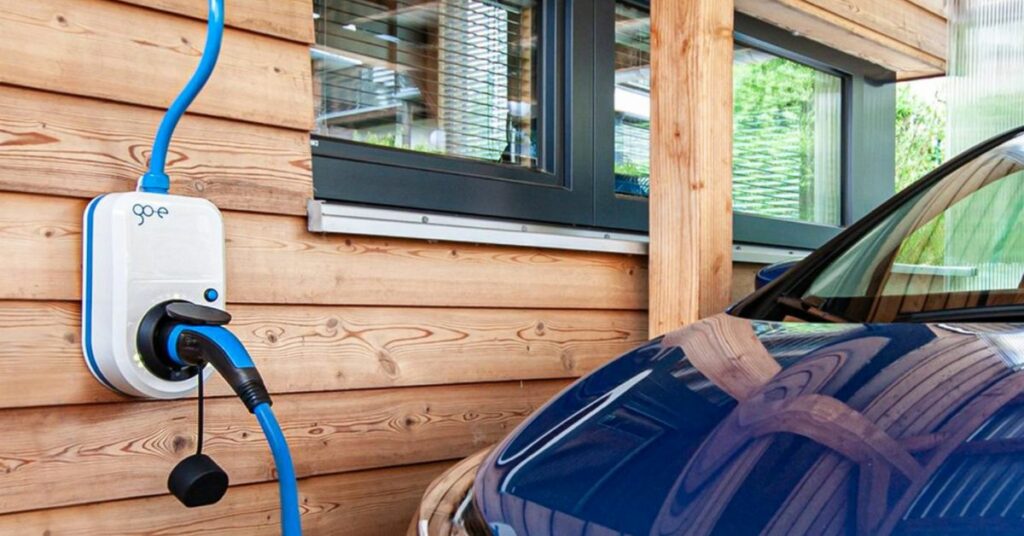
Many electric vehicle owners wonder how much adding an EV will impact their electricity bills. The truth is that your local electricity rate plays a big role in determining the cost of charging EV at home. Understanding this can help you plan your budget and make smart decisions about when and where to charge. Knowing how much does electric car raise electric bill helps you see the bigger picture. EVs are often cheaper to operate than gas cars, but costs vary depending on your location, your driving habits, and the type of charger you use. By learning how local electricity rates influence charging costs, you can avoid surprises at the end of the month. Understanding Electric Car Charge Costs Electric car charge costs depend on several factors. The most obvious is the size of your car’s battery. Larger batteries take more energy to fully charge, which can increase your electricity usage. The type of charger you use also matters. Charging at home with a standard Level 2 charger is usually cheaper than using public fast chargers. When calculating the cost of charging EV at home, you multiply your battery capacity by your electricity rate. For example, a 60 kWh battery with a 13-cent per kWh rate will cost roughly $7.80 for a full charge. Multiply that by the number of charges each month, and you have a clearer picture of your electric car charge costs. How Local Electricity Rates Make a Difference Electricity rates vary widely across the country. States with higher energy costs make charging an EV more expensive, while areas with low rates offer significant savings. Urban areas often have higher rates due to demand and infrastructure costs, while rural areas may see lower rates. In Philadelphia, for example, EV owners face slightly higher rates than in some surrounding areas. Understanding Ev charging cost is important if you want to budget accurately. Charging during off-peak hours can also lower costs since many utilities offer time-of-use rates. Does a Car Battery Charge While Driving Some people ask whether a car battery charges while driving. In electric vehicles, regenerative braking allows the battery to capture energy when slowing down. This helps extend your range slightly, but it does not replace standard charging. Knowing this fact helps set realistic expectations for your electric car charge costs. How Much Does a Level 3 Charger Cost Level 3 chargers, also known as DC fast chargers, provide rapid charging for EVs. They are much faster than home chargers but come with higher costs. How much does a level 3 charger cost depends on the model, brand, and installation requirements. Generally, the hardware costs between $10,000 and $50,000, plus professional installation. These chargers are more common in public spaces than in homes. Businesses use Level 3 chargers to serve multiple EVs quickly, while homeowners usually rely on standard home chargers. Knowing the cost helps you decide whether investing in fast charging is worth it. Cost of Charging EV at Home Most EV owners do the majority of charging at home. The cost of charging EV at home is generally lower than at public stations, and it offers convenience. On average, home charging ranges from $30 to $70 per month for typical daily driving. Factors affecting the cost of charging EV at home. Battery size and capacity Local electricity rates Charging frequency and timing Efficiency of the charger By monitoring your electricity usage, you can estimate how much does electric car raise electric bill and adjust habits to save money. Practical Tips to Lower Your Charging Costs There are simple ways to manage your monthly spending on EV charging. Charge during off-peak hours when electricity rates are lower Use energy-efficient chargers to reduce wasted power Monitor your EV battery health for optimal charging efficiency If possible, combine charging with renewable energy sources like solar panels Avoid letting your battery fully deplete before recharging How to Get the Most Efficient EV Charger For Cars Selecting the right charger for your home is key. Look for features like safety protections, compatibility with your EV, and the ability to schedule charging times. Some chargers allow you to optimize for lower electricity rates. Choosing the right home charger affects convenience and cost. Level 1 chargers are slow, adding 3–5 miles per hour. Level 2 adds 15–30 miles per hour. Look for safety features like overcurrent and overheating protection. Smart chargers let you schedule off-peak charging and monitor usage. Make sure the charger matches your EV model. Outdoor chargers should be weatherproof and installed by a licensed electrician. If you want a reliable solution, check out the best ev car charger to reduce electric car charge costs and stay efficient. Comparing Home Charging and Public Charging While home charging is usually cheaper, public charging stations offer convenience, especially for long trips. Level 2 public chargers cost more per kWh, and Level 3 fast chargers are even higher. By combining home charging with occasional public charging, you can balance cost and convenience. Understanding the cost of charging EV at home versus public stations helps you make smart decisions about when and where to charge. Planning for Efficient EV Use Planning your driving and charging habits helps control costs. Short daily trips are cheaper to charge than long commutes. Monitor your electricity usage and take advantage of energy-saving features in your EV. Knowing how much does a level 3 charger cost at public stations helps when planning road trips. By anticipating costs, you can avoid unexpected bills and ensure your EV is ready when needed. Final Thoughts The cost of charging EV at home is manageable for most drivers and often cheaper than fueling a gas car. By understanding your local electricity rates, choosing the right charger, and planning your charging schedule, you can control expenses while enjoying the benefits of driving electric. Whether you are wondering how much does electric car raise electric bill or considering installing a home charger, understanding your energy use is key. With proper planning and efficient
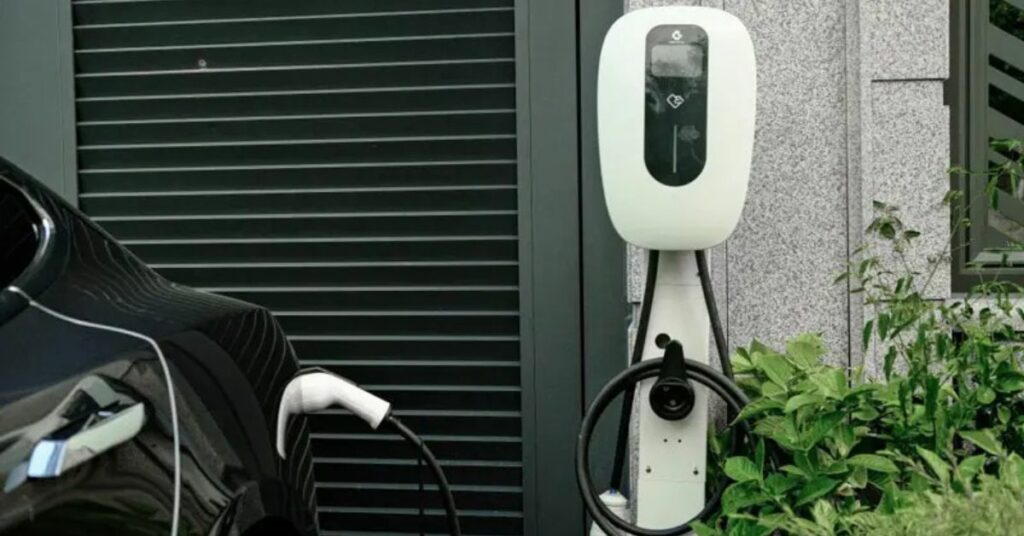
The future of travel isn’t just about roaring engines, it’s about quiet efficiency and electric power. For riders who tour with an electric support vehicle or own an EV themselves, choosing the right EV smart charging station is just as important as packing the right gear. As the industry evolves, today’s smart chargers do more than refuel; they connect, adapt, and conserve energy while helping you stay in control from anywhere. If you’re looking to upgrade your garage or charging habits, here’s what matters most in the world of EV smart charging. Smart Charging Starts Here: The Role of a Smart Connect EV Charger Far from standard plug-and-play systems, innovative EV charging solutions bring intelligence to your charging routine. These chargers are the best options for mobile riders and technology-savvy drivers. With the right smart charger, you won’t just charge, you’ll charge smart. How is a Smart Charger Different from a Standard EV Charger? Standard chargers simply provide your battery with electricity, whereas smart chargers provide you with control, insights, and flexibility. The best EV charging experience comes from managing your sessions, tracking costs, and even responding to local energy demands. Smart chargers give riders more independence and energy efficiency, especially on long tours. Remote monitoring via smartphone apps Integration with solar or home energy systems Adjustable charge speed and timing Notifications and usage reports Designed to work like the best EV car charger for any lifestyle Smart EV Charging Solutions: Features That Make a Difference Whether you’re charging up in the garage or at a trail stop, a portable charger electric vehicle setup needs flexibility, durability, and connectivity. These characteristics differentiate between basic functionality and future-oriented efficiency, both of which riders and EV enthusiasts can appreciate from a charger built to adapt. In addition to power output, we should consider features or elements that optimize usability and safety. The ideal charger would offer scheduling capabilities, robust reporting, and easy integration with other home energy systems. The EV lifestyle is about more than plugging in; it’s about having a connection that is smarter than the basic plug. 1. Charging Capabilities and Power Output When you’re on a schedule or heading to the next state, fast charging can be a game-changer. Look for units that offer high kW output and dynamic load adjustments. Portable charger electric vehicle setups with fast-charge functions give you speed without sacrificing convenience. Level 2 chargers with 9–11 kW range DC fast charging capability for quick top-ups Adjustable amperage for customized charging needs 2. Wi-Fi and App Connectivity Keeping connected when travelling is essential. A smart connect EV charger will let you monitor your charging, start and stop sessions, and get alerts from a specific app, for drivers who depend on a schedule and vital real-time information. Apps can also track energy usage over time, suggest optimal charging windows, and automatically update your firmware. If you’re using a support EV during long motorcycle tours, smart connectivity ensures it’s always ready without you needing to check manually. 3. Scheduled and Load-Balanced Charging Set it and forget it, that’s the power of scheduled and load-balanced charging. Managing when and how your EV smart charging station pulls energy helps lower electricity bills and reduce grid stress. Peak Hours: Schedule sessions for off-peak hours to take advantage of lower rates. Charging Multiple Vehicles: Automatically balance the load between two EVs. Utility Grid Integration: Respond to local energy demand signals in real-time. Overnight Charging Optimization: Charge while you sleep and save on costs. Delayed Start for Solar Sync: Align charging with your solar output cycle. 4. Energy Usage and Reporting Want to monitor how much energy your EV is actually using? The best EV car charger includes a usage dashboard that provides insight into your usage patterns, costs, and charge duration. The insights provide a deeper understanding of your behaviors, enabling more effective planning. Daily and monthly usage reports Cost estimates based on live utility data CO2 savings tracking for eco-minded riders Maintenance alerts to protect the charger’s life 5. Compatibility with Home Solar Systems If you have installed solar panels, you can use them to power your EV. Smart EV charging solutions can sync with solar systems to reduce grid reliance, making your rides truly sustainable. Solar-Ready Chargers These detect and extract energy directly from your solar array. They intelligently optimize charging times based on solar output levels. This clearly provides an innovative solution to reduce your carbon usage and energy costs. Smart Inverter Integration Connect with hybrid inverters! They allow you to manage energy sustainably. Hybrid inverters balance energy use between your EV, house, and battery storage. Now you have more control over how and when you use your energy. 6. Safety Features and Certifications Safety should never be an afterthought. Smart chargers come equipped with multiple layers of protection and certifications to ensure they’re safe for both home and road use. UL and ENERGY STAR certifications Overheat and short-circuit protection Weather-resistant casing for outdoor installs Each one helps keep your level 1 vs level 2 charging options secure, so you never have to second-guess your setup. Future of Smart Charging: How Best EV Car Chargers Are Evolving The future is more than wireless; it’s dynamic, connected, and more innovative by the mile. Smart charging is evolving with the integration of artificial intelligence, grid interaction, and smart home technology. Riders who go with forward-thinking chargers will always be prepared for the standards of the future. Helping support EVs! The need for EV technologies to appear in margin-positive forms is impressive, and will continue to yield more related dual-trays than beef. Vehicle-to-Grid (V2G): Turn your EV into a backup energy source for your home. Integration with Smart Homes: Link your charger with thermostats, panels, and energy providers. Advanced AI Charging Technology: Minimize charge times and costs with smart EV charging solutions. Last Thoughts: The Best Smart EV Charger for Your Needs The right EV charger isn’t just a matter of its charging speed; we also consider safety, connectivity, energy efficiency,