
Get started with us, You will need a good plan !
- 166 Geary Street San Francisco, California 94108
Many renters want an electric car but feel unsure about EV charging in apartments. People worry about permission, parking, and access to power. It can feel like something meant only for people who own houses. The truth is that renters can still make it work. With a little planning, you can charge just fine even in a shared building. This guide explains real-world solutions in simple language so anyone can follow them without stress.
The first step is knowing the basic ways an EV can charge. Some are slow but easy to use. Some are fast but need approval. Once you understand these differences, the rest becomes easier. Many renters start by asking how to charge EV at apartment buildings in a simple way that does not cause problems with the landlord. You do not need special knowledge. You only need to know what fits your daily routine.
The idea behind smart EV charging also helps renters. It means charging in a way that saves time and uses the power that is already available. Once you look at charging through that lens, you start to see that you have more control than you think.
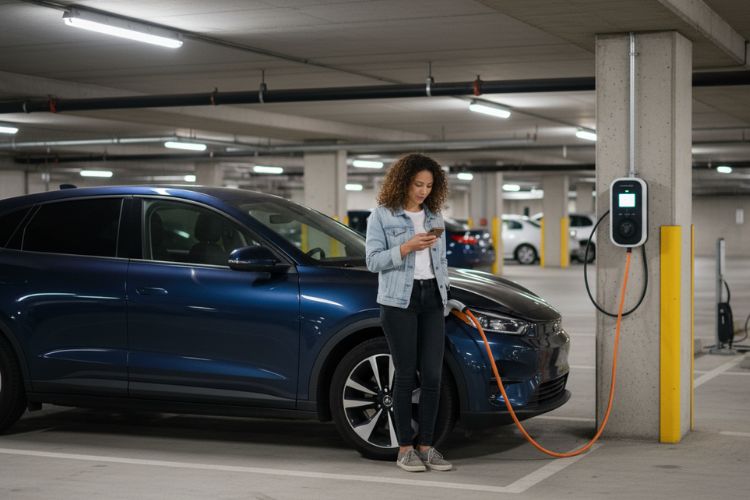
There is no single method that works for everyone. Renters use different setups based on the building rules and their parking spot. Some people plug in at their complex while others stop at public chargers. Many mix and match during the week. The important thing is finding a method that feels natural rather than stressful. When you focus on simple habits, you begin to understand how to charge EV at apartment situation in a smooth and predictable way.
Many apartments now offer shared chargers. This is one of the most common ways people learn how to charge electric car at apartment properties without asking for special construction. You plug in and park for a while and move the car when the session ends. Some buildings let residents use the chargers freely, and others require a small fee. Either way, the process is simple.
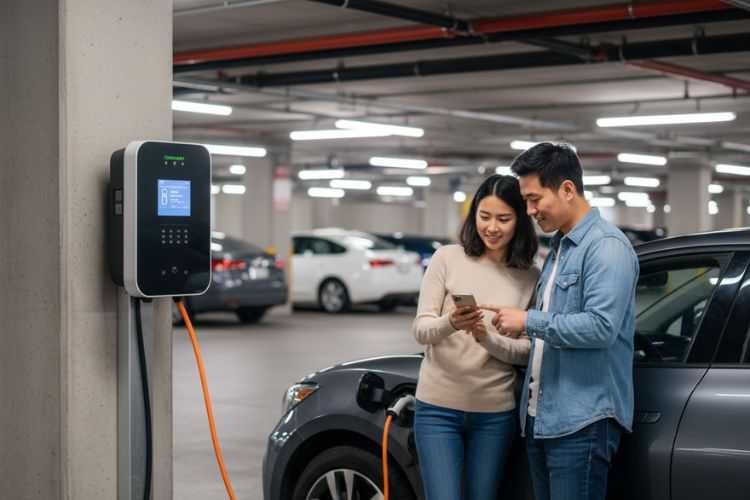
Shared chargers often work best for renters who come home at predictable hours. If your parking spot is near the charging area, the routine becomes even easier. This also helps newcomers get used to EV charging at apartments without worrying about technical issues. These stations usually support different charging speeds, and you can understand them better once you learn the idea behind levels of EV charging, which explains how long each type of charger needs to add range.
If your building has no charger, you can still ask for permission to install one. Many landlords are open to the idea now because more renters drive electric, and it even adds value to the property. When you approach them, share simple details about the installation steps and the licensed electrician who will handle the work. This usually eases their concerns and helps start a productive conversation.
Sometimes, renters do not need a full wall-mounted unit. A portable Level 2 charger can be enough for daily use. Approval is still required, but the setup is lighter and easier for everyone. This kind of option is becoming more common as EV charging in apartments grows and more renters want practical ways to charge electric cars without depending on public stations every day. If your building is flexible, you might be surprised how often a polite request leads to a yes.
Portable chargers are often the easiest for people who have their own assigned space. Some renters only need a simple power source to keep their car topped up. Even slow charging works well if you do not drive long distances. You only need to make sure the outlet is safe and the landlord approves the setup. Many people learn how to charge an electric car in an apartment by starting with a small portable charger and keeping their routine simple.
This method works best when you drive short daily routes. The charger adds range overnight and you wake up with enough battery to get through the day. Renting an apartment does not stop you from using a portable setup as long as you follow safety rules.
Public chargers are everywhere now. Malls, gyms, grocery stores, and main roads often have them installed. Public stations are fast and easy to use, and they work well when you do not have access to a home charger. Many renters stop for a charge while running errands or during lunch. Once this becomes part of your routine, you realize that you already know how to charge electric car at apartment living by simply relying on what is around you.
Public charging also helps people who worry about busy shared chargers at their complex. You can spread your charging sessions across the week and avoid stress. This option makes life simpler and helps renters who move often and do not want to install anything.
Charging at work is one of the most helpful solutions for renters. Many companies now offer charging spots for employees. You plug in during the day and leave with a full or nearly full battery. This completely removes the need to charge at home. People who drive moderate daily distances find this method reliable and stress-free.
Some workers even talk to their employers about adding chargers if none exist. Many companies accept because the demand keeps growing. Once workplace charging becomes part of your day, you automatically know how to charge an electric car in an apartment because home charging becomes optional instead of required.
Some renters can plug into a normal outlet near their parking space. It charges slowly, but it works for many people. Slow charging is not a problem when your car sits for hours while you sleep. As long as the outlet is in good shape and the landlord approves it, this is a cost-friendly method. It is one of the simplest ways to handle EV charging at apartments without buying special equipment.
Safety matters more than speed here. Never use long cords or unsafe setups. If the outlet is closed and the power load is fine, then this method can fit your routine.
Every building has rules to protect residents before plugging in or installing anything. Talk to the landlord or the HOA. They might check wiring capacity or parking rights. Following the process step by step avoids problems later. These checks are normal and not personal. They just keep the building safe.
These conversations feel easier once you already understand how to charge EV at apartment settings. You can explain your needs clearly without overwhelming the landlord. Clear communication helps renters get approval for simple setups.
Costs depend on where you charge. Lightweight charging at home adds a little to your electric bill. Public chargers charge by the session or by the hour. Building chargers may add a small monthly fee. Portable chargers have a one-time cost and then run cheaply afterward.
Many renters try to estimate the electric car charge cost to decide which method works best. In most cases, electric charging is still cheaper than buying fuel as long as you use the charger that fits your lifestyle.
Renters often deal with limited parking, a lack of outlets, or busy shared chargers. These issues are real, but they can be solved. Public chargers fill the gaps. Workplace charging covers most daily needs. Portable chargers work for short-range drivers. Once you try different methods, you discover that any building can support your daily driving if you plan a little.
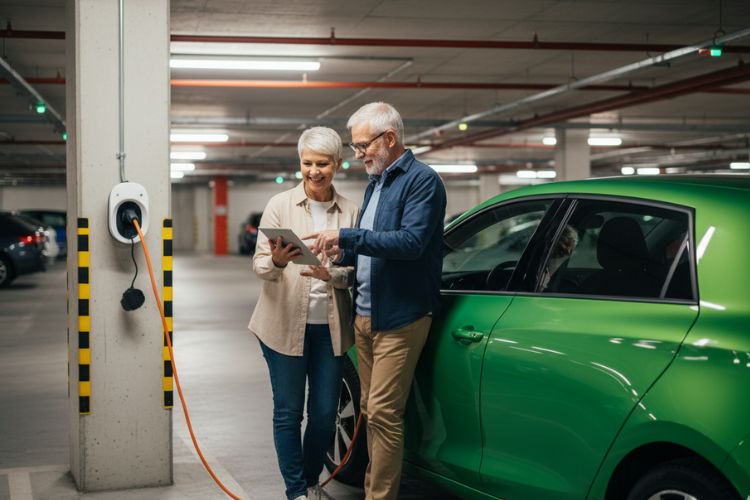
Keep your routine light. Plug in when you already planned to park or shop. Use apps that show open chargers before you drive there. Stay patient when the building charger is busy because most people follow the same pattern. As more people rely on EV charging in apartments, finding a rhythm becomes easier. Once you settle into your own routine, you will stop thinking about the process and simply charge when needed.
Charging an EV while renting is easier than it looks. You can use shared chargers, public stations, workplace charging, or a simple outlet. You only need a method that matches your routine and the building rules. With these choices, EV charging in apartments becomes a normal part of daily life instead of a constant challenge.
Want your car to look as good as it drives? Car Comfort LLC makes it easy with professional deep cleaning and car wash services. Let their experts handle the mess while you enjoy smooth, worry-free EV charging.